

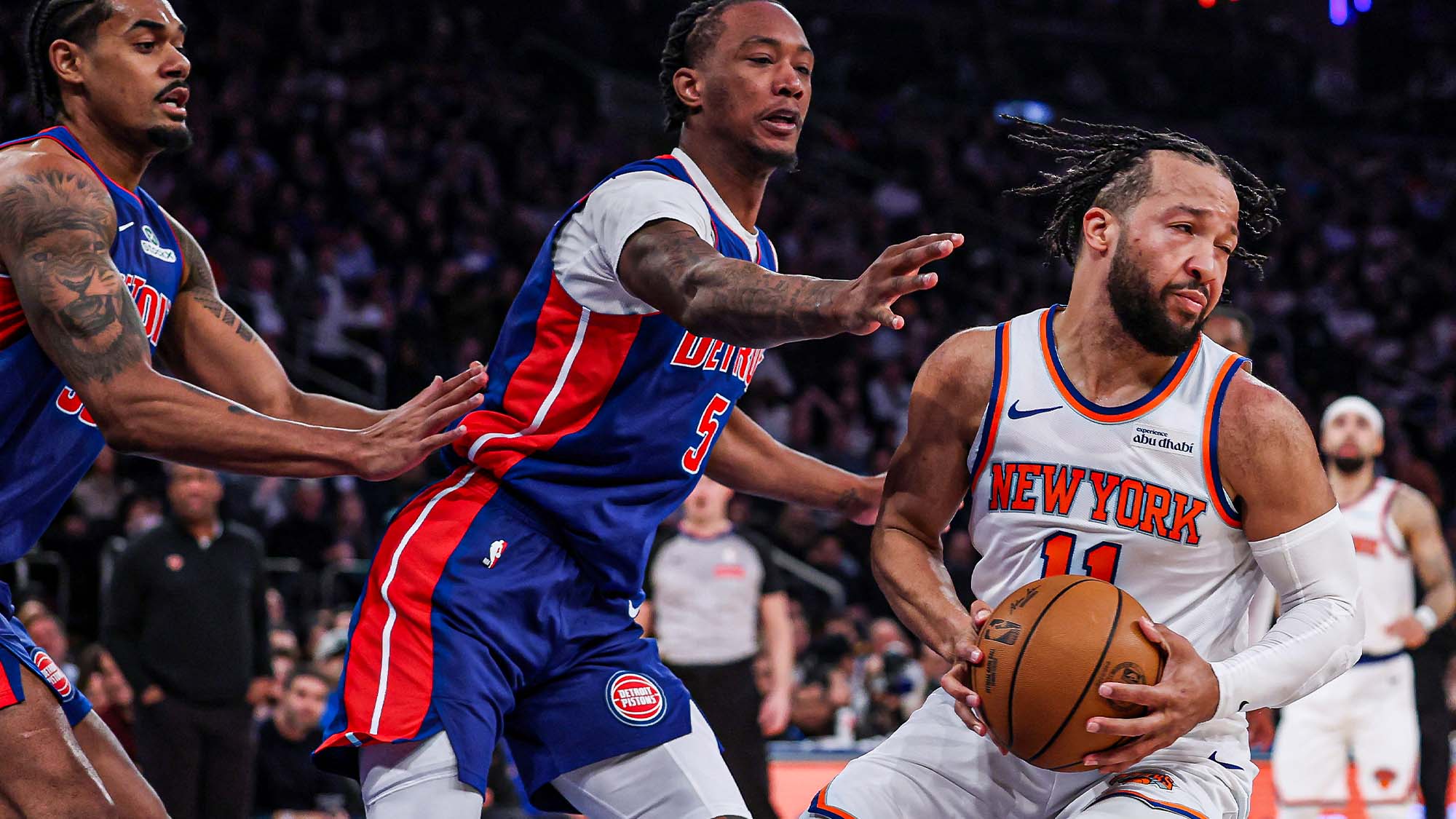
Is it crazy to suggest that a professional basketball team can play any better than the New York Knicks have in these playoffs?
Perhaps. In that case, call us crazy, because we’re going to do it anyway.
The Knicks have outscored their opponents by 194 points in the playoffs. It’s the best mark through a team’s first 10 playoff games in NBA history.
Asking more of the Knicks at this point seems absurd. However, if they want to go all the way, the Knicks have to hold themselves to the highest standard.
New York won’t face the likes of the Atlanta Hawks or the Philadelphia 76ers in the next two rounds. The competition is about to get tougher, and the Knicks must be ready.
For that reason, the Knicks have to make sure every axle in the machine is greased before the Eastern Conference Finals.
Here are two areas where New York can be even better in the next round—and probably have to be if they want to take down Detroit or Cleveland.
1. Denying corner threes
Overall, the Knicks’ defense has been phenomenal. They have a 104.8 defensive rating in the playoffs, per NBA.com, ranking second-best in the league behind only the San Antonio Spurs (103.4).
One slightly alarming tendency, though, is the Knicks’ propensity to allow those juicy corner threes.
The Knicks’ opponents are shooting 10.0 corner threes per game in the playoffs, third-most in the league. It hasn’t hurt the Knicks yet, but it could come back to bite them, especially if they face the Cavaliers in the next round.
Cleveland ranks fourth in the NBA with 9.7 corner three-point attempts per game in the playoffs. The Cavs have not converted many of them just yet, making only 31.8%, but their rotation is filled with proven corner shooters around the gravity of Donovan Mitchell and James Harden. Sam Merrill (45.0%), Max Strus (43.2%), Jaylon Tyson (41.6%), and Dean Wade (40.1%) are all shooting above 40% from the corners in their careers.
If the Knicks keep coughing up 10 corner tries per game against Cleveland, it could allow the Cavs to go on some explosive runs. Perhaps it won’t be enough to doom the Knicks overall, as New York will have plenty of advantages in other areas, but if you want to win a title, you have to take away every ounce of hope from the opponent. That requires eliminating their trustiest weapons.
In fairness to the Knicks, their high volume of opponent corner threes could be an intentional result of leaving poor shooters open, such as Philadelphia’s Kelly Oubre Jr. It doesn’t necessarily mean New York is doing a poor job of guarding the corners. Against proven corner shooters, their scheme will likely focus more intently on taking shots away.
For now, though, it would behoove Mike Brown to dive into the film and see if there is anything New York can do better to prevent potential clean looks from corner snipers in the next round.
2. Ball security
The Knicks’ ball security has certainly not been poor in the playoffs, but it’s an area where they have not been elite, unlike many other offensive categories.
New York is averaging 13.3 turnovers per game in the playoffs, ranking sixth-best out of 16 teams. Again, it’s not bad, but for a team that ranks first or second in in most other offensive categories, it’s something worth a look.
Turnovers were at the crux of New York’s lone pair of playoff losses. They had 32 turnovers across those defeats; 14 in Game 2 against the Hawks, and 18 in Game 3. Those turnovers led to 39 points.
The Hawks only had a chance against the Knicks when New York’s turnovers created transition opportunities. Across Games 2 and 3, the Hawks scored 40 fastbreak points (20 in each game). Across the four games won by New York, Atlanta had a measly 32 fastbreak points, just 8.0 per game.
This is the same formula that could cause the Knicks problems against Detroit.
The Pistons’ half-court offense has been gruesome in the playoffs. Against both the Magic and the Cavaliers, the Pistons have struggled mightily to create easy shots when bogged down in the half-court.
But when Detroit’s physical defense forces a bevy of turnovers, they can get easy baskets in transition, allowing them to hide their half-court offensive struggles.
In the playoffs, when forcing at least 16 turnovers, the Pistons are 4-0, averaging 110.3 points per game. When forcing under 16 turnovers, they are 2-5, averaging 100.9 points per game. Detroit has yet to hit the 110-point mark when forcing under 16 turnovers.
As long as the Knicks keep the basketball secure and prevent transition opportunities, Detroit’s offense will be overmatched against New York’s revitalized defense. The Pistons’ only legitimate chance of consistently stringing explosive offensive performances over a seven-game series is to force a boatload of turnovers.
The Knicks briefly allowed the Hawks to seize control of a series because they failed to protect the ball. Detroit’s defense is far stronger than Atlanta’s, so the same problem could arise again.
But having already experienced this pitfall in the first round, the Knicks should be prepared. After they allowed their turnovers to sink them against the Hawks, they made sweeping changes to their offense, and since then, they have played better basketball across the board, including the turnover department.
The Knicks don’t have to rack up 130-point games to beat the Pistons. In fact, they shouldn’t expect that to be remotely possible against such an outstanding defense. All New York needs to do is protect the ball to force Detroit into consistent half-court possessions on offense. If the Knicks can do that, their defense should dominate the Pistons enough for the offense to only need 100-110 points per night to win games. New York can win a grind-it-out series in this fashion.
It all starts with protecting the basketball.